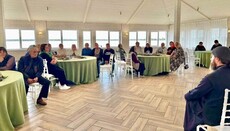

Archons explain why Ecumenical Patriarch should remain in Turkey
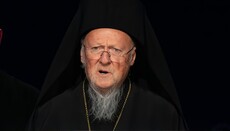
The Patriarchate of Constantinople has once again found itself at the center of debate over a possible relocation of its residence from Istanbul. This was reported by Public Orthodoxy, the website of the Archons of Constantinople.
On May 14, 2026, Dr. Harry Dimopoulos, an Archon of the Ecumenical Patriarchate – an honorary title for laypeople associated with the Patriarchate of Constantinople – published an extensive article on the portal, offering a set of interconnected arguments for keeping the patriarchal residence in Muslim Turkey.
The first argument is canonical identity: the patriarch’s authority is inseparable from Constantinople, since it is rooted in the decisions of the ancient Councils, and relocation would undermine its legitimacy and open the way to challenges against its primacy.
The second is historical continuity: for 1,700 years the Church has remained in Constantinople, linking the Orthodox world with the places of all seven Ecumenical Councils.
Dimopoulos also cites a geopolitical argument: Istanbul’s position between East and West gives the Patriarchate a unique platform for Christian-Muslim dialogue. In his view, relocation to Athens, Geneva, or New York would tie the Patriarchate to a particular national or Western identity.
Leaving Istanbul, the author insists, would also destabilize pan-Orthodox unity. In addition, Dimopoulos points to pastoral responsibility toward the small local community and the descendants of the Greek diaspora.
The final argument is theological: vulnerability strengthens spiritual authority, while Patriarch Bartholomew’s words that he feels “crucified” in Turkey reflect the reality of redemptive service.
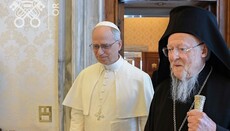
As the UOJ reported, an Archon of the Patriarchate of Constantinople had proposed convening a Council of Primates. The debate over relocating the residence of the Ecumenical Patriarchate has continued for decades and periodically intensifies against the backdrop of restrictions imposed by Turkey: in particular, the Halki Theological School has been closed since 1971, while the number of Orthodox Christians in Istanbul has fallen from more than 100,000 in the mid-20th century to only several thousand today.