
Don’t make your home in a roadside inn

Rome was thought eternal – yet it fell in three days. Looking at its ruins, Blessed Augustine grasped something we, too, must come to understand as we stand amid the wreckage of the world we once knew.
Rome was thought eternal – yet it fell in three days. Looking at its ruins, Blessed Augustine grasped something we, too, must come to understand as we stand amid the wreckage of the world we once knew.
The year is 410. Alaric’s Visigoths have just stormed and sacked Rome – the city the entire world of that age believed would stand forever. Far away in Bethlehem, Blessed Jerome of Stridon writes that the bright light of the world has gone out and that in one city the whole world has perished. The pagans look for someone to blame and quickly find their culprits: the Christians, who, they say, brought disaster upon Rome by abandoning the old gods.
Across the sea in Hippo, Bishop Augustine sits down at his desk and begins The City of God – a book that will take him thirteen years to write.
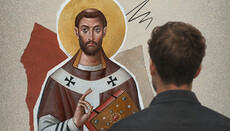
We come to him at a moment when the ground has given way beneath the feet of the citizens of a once-almighty empire. And we have questions for the saint. Our world, too, is coming apart at the seams, and we, too, are desperately searching for something – anything – to hold on to in troubled times.
How did the eternal suddenly become mortal?
“Vladyka, you witnessed the collapse of something everyone thought unshakable. Rome had stood for a thousand years. How do you go on living when stability itself has become a thing of the distant past?”
Blessed Augustine does not rush to answer. He gazes into the distance, as though watching the fall of the empire unspool before him like a reel of film.
“You want to know why the city fell? Wait. Let me tell you about something else.
There are two cities, built by two kinds of love. The earthly city was built by love of self carried to the point of contempt for God; the Heavenly City, by love of God carried to the point of contempt for self. The first glories in itself. The second glories in the power of the Lord.
“So Rome fell because of pride?”
“Rome was only a home for countless human hearts. And every heart chose whom it would serve. As long as people loved not the city’s mighty walls or its seemingly limitless power, but God dwelling among them, the city stood. When that love ran dry and nothing remained but pride – everything collapsed in an instant.”
A bed nailed to the floor
“But how are we supposed to live in this world, then? Build a home, raise children, work – when all of it can disappear overnight?”
Blessed Augustine smiles, narrowing his eyes slightly, as though this were precisely the question he had been waiting for. Then he tells a parable.
“Imagine a traveler on a long journey. He stops at a roadside inn to rest. They give him water, make up a bed for him, give him shelter for the night. Is it reasonable for him to make use of all this?”
“Of course.”
“But would it be reasonable for him to nail the bed to the floor and declare the inn his permanent estate?”
I say nothing. The answer is too obvious to need saying.
“There – now you see the difference,” the holy bishop continues. “To enjoy something means to become attached to it in love as though it were an ultimate good. To use something means gratefully accepting what has been given to help you reach your final destination.
If we wish to return to our Heavenly Homeland, where alone we can truly be happy, we must use this world rather than make it our ultimate delight.
“So our home, our work, the country we live in, the people around us – none of that is evil?”
“Of course not. It is a roadside inn. The sin is not sleeping in the bed. The sin is nailing it down and refusing to continue the journey.”
Order in a waiting room is still order
“Vladyka, isn’t it cynical to call earthly life merely a waiting room? Doesn’t that diminish everything God has given us in this life?”
Blessed Augustine shakes his head. In the question he recognizes a misunderstanding he has encountered many times before.
“The peace of all things lies in order,” he says firmly. “And order is the arrangement that assigns everything its proper place. A traveler must also respect the order of the house where he is staying: he does not break the furniture, insult his hosts or refuse to pay for his lodging. But he remembers that this house is only one stop along the way.”
“So we are still bound to be law-abiding citizens even though we know the earthly order is temporary?”
“Twice over.
The person who remembers his true Homeland takes better care of the roadside inn than the one who mistakes it for his final home.
“Longing for the Heavenly City neither abolishes nor destroys anything on which earthly life depends. We obey human ordinances in pursuit of peace on earth – provided they do not conflict with our faith.”
Thoughts among the ruins of a roadside inn
“Then why are we so afraid when the inn begins to shake? Why does losing the world we know feel like the greatest loss imaginable?”
Augustine is silent longer this time. Then he speaks quietly, without the firmness of a teacher – more like a man remembering a pain of his own.
“Because we confuse temporary shelter with our true Homeland.
As long as the traveler remembers where he is going, the collapse of a roadside inn is a tragedy – but not the end. He will find another place to spend the night. But the man who has nailed his bed to the floor and convinced himself there is nowhere else to go really does lose everything when the roof comes crashing down.
“So we should still love this world?”
“The question is not whether to love it, but how to love it rightly. Our citizenship is in heaven, says the Apostle, and from there we await the Savior. Remembering this does not mean despising the earth. It means refusing to demand from it what it could never give us in the first place – an unshakable foundation.”
At the end of our conversation, the Blessed Augustine looks at me like a fellow traveler whose path will soon part from his own at a crossroads.
“Go. Make use of this world. Love those dear to you. Build your home. Do your work. Fulfill your calling. Just remember to write one word beneath it all – temporary.”