
God-intoxicated: Why Isaac the Syrian prayed for demons and did not believe in eternal hell
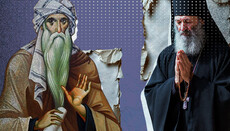
The Church commemorates a saint whose theology is a radical protest against the dry laws of religion. Why God is not “just,” and hell is a school of love.
On February 10, the Orthodox Church commemorates Isaac the Syrian. His theology is intoxication with divine love – a radical protest against the arid legalism of formal Christianity.
Mar Isaac (as St Isaac is also called in the Syriac tradition) reminds us that religion without mystical rapture, without the “wine of love,” inevitably turns into a dull ideology. And the only way not to harden within this dead formal Christianity is to drink so deeply of divine love that one goes mad from it – and finally comes to one’s senses.

A bishop for five months
St Isaac was born in the seventh century on the shores of the Persian Gulf, in what is now Qatar. From early childhood his soul was tuned to a different frequency. He felt a calling to the spiritual life from his earliest years. Even the monastery he entered when he grew older seemed too noisy for him. Mar Isaac withdrew into the desert.
Yet even from the desert, the fame of his wisdom reached the bustling cities. He was brought to Nineveh almost by force and ordained bishop.
Mar Isaac remained on the episcopal throne for only five months. The final straw was a dispute between two Christians who came to him for judgment. One demanded repayment of a debt; the other asked for time. When Mar Isaac began to instruct them with quotations from the Gospel, the plaintiff bluntly asked him to put those quotations somewhere else and save them for preaching – he had come to get his money back.
“If people do not want love, then my authority here is powerless,” the saint said – and he departed for the mountains of Khuzestan, to his beloved God, whom the world did not wish to recognize.
The garment of God
The theology of St Isaac the Syrian is divided by a clear demarcation line into two realms: “this present age,” ruled by bustle, movement, and fragmentation, and “the age to come,” where stillness, unity, and God reign.
Mar Isaac builds his theological vision on the foundation of hesychia. His mysticism flows from the depths of the heart, not from the calculations of the intellect. Our reason is like a prostitute: it runs after every image, every fear, every piece of news. But Mar Isaac did more than merely quiet his mind. He returned it to its primordial dwelling – the spiritual heart. And what he discovered there filled him with awe and wonder.
In those depths, Isaac saw that the fundamental basis of existence is humility. Not an ethical category, but an ontological one.
“Humility is the garment of God. It is the way divine presence exists in the universe without destroying it by its greatness.”
From this revelation arises the existential necessity for the Christian to acquire humility, for it is the only way to contain and to know God. For the humble person, who has nowhere left to fall because he already stands at the very bottom of spiritual poverty, the greatest miracle is revealed: that this bottom is God Himself. God is not “above” – He is “below.” One must descend to Him, not ascend. And the only path that leads to Him is self-emptying. As long as the vessel of the heart is filled with one’s own “I,” there is no room in it for the Other.
Three levels of knowledge
Mar Isaac distinguishes three levels of gnosis – of knowledge:
- The first is bodily knowledge. This is the level on which most of us live – the world of cause and effect, logic, technology, and fear. Here a person believes only in what can be touched or calculated. Life is lived in constant anxiety. If everything depends on external factors, then the human being is merely a slave of circumstances. Isaac calls this level “naked reason,” unprotected by faith.
- The second level is soulful knowledge. Here a person discovers the world of meaning. He begins to explore the laws of the spirit, practice virtue, and reflect on God. Yet even here he still relies on his own strength. This is the level of “religious athleticism.” A person may be noble, but he is not yet free.
- The third level is spiritual knowledge. This is a leap into the abyss. Here faith replaces logic. Spiritual knowledge does not analyze God – it lives by Him. “As soon as a person reaches spiritual knowledge,” Isaac writes, “the question ‘why?’ disappears for him.” All the contradictions of the world dissolve in divine light.
At this level, a person sees the world “with God’s eyes” – not as a chaos of problems, but as a symphony of logoi. He begins to discern the deep meaning of everything that happens. He sees that all creation suffers and groans not in vain – it is part of a plan leading us toward the vision of God. He understands that God is not a harsh judge handing out sentences in fiery Gehenna. He is a merciful Father, whose goodness toward the world is without limit.
The madness of love
God created the world not because He needed worship, but because His love was so abundant that it “could not help but overflow.” Creation itself is an act of divine “madness” of love.
There is no trace of wrath in God, for wrath is a passion, and God is impassible. What we call “punishment” is merely our subjective perception of God’s healing surgery.
“God does nothing out of retribution, but everything for benefit and healing,” the elder teaches.
Man is not a defendant in a courtroom, but a patient in the hands of an infinitely gentle Physician. From this revelation flows Mar Isaac’s teaching on Gehenna.
Hell as a severe school
Hell, as St Isaac sees it, is a temporary workshop. He does not deny hell – but he radically changes its status. For him, hell is not an eternal prison, but a “severe school.” He rejects the idea that a good God could create a rational being only for it to suffer endlessly. That would contradict the very nature of the Creator.
Gehenna is the place where God’s love acts as fire, burning away evil. It is painful – terribly so. But in that pain there is meaning and purpose. Eternal torment, by contrast, would have no meaning at all. Isaac the Syrian insists that if evil were eternal – in the form of an eternal hell – then evil would have triumphed over God. But God is the Victor over hell and death. And therefore, in the end, love must consume everything.
This hope of Isaac is not cheap optimism, but the hard-won faith of a man who looked into the abyss of suffering and received the revelation that God is deeper than any abyss.
In the age to come, the elder teaches, everything will be permeated by God, as iron is permeated by fire. God will not rest while even one sheep remains lost in the darkness. Divine mercy is “a torrent that cannot be stopped,” and in the end it will fill every abyss, transforming all of being into an endless song of joy and astonishment.
This theologoumenon of Mar Isaac, of course, provokes many objections, including canonical ones – especially from those Christians who seem to await not so much the resurrection of the dead as the eternal and unending torments of sinners. We will speak of this separately. For now, let us continue our journey into the beautiful spiritual world of Mar Isaac.
The cross as a mirror
St Isaac categorically rejects the notion of redemption as a juridical transaction – a “payment for sins.” The Cross is the supreme revelation of who God is. God ascended the Cross not to appease the Heavenly Father or satisfy His thirst for justice, but to show humanity: “I love you even when you are killing Me.”
“The Cross is a mirror in which humanity must see its darkness – and at the same time the blinding light of divine forgiveness.”
This is the point where human evil is swallowed up by divine infinity. The Cross is the key that opened the gates of heaven. God gave us medicine – the God-man’s Body and Blood – by partaking of which we receive salvation.
The equality of love
From this theological depth is born a unique ethic. If God loves everyone – the righteous and demons alike – then the human heart can know no division. Isaac calls us to an “equality of love.” He teaches that we must look upon a murderer and a saint with the same compassion, for both are children of the same Father – only one of them is mortally ill.
Isaac insists that a holy person cannot help but weep for those who do evil. More than that – he calls us to pray even for demons. This is love carried to its ultimate conclusion. If God is love, then He cannot stop loving even those who reject Him. God loves every ant, every grain of dust, with the same intensity with which each Person of the Holy Trinity loves the Others.
The distance between man and God is not measured in kilometers of space, but in the thickness of our ego. As soon as the heart is purified through tears and silence, it suddenly discovers that heaven is within it.
The theology of Mar Isaac calls Christians not to fear becoming gods by grace – to love each and every being as God loves us, giving everything and demanding nothing in return. And this is the most hopeful thing of all: through all his teaching, St Isaac the Syrian tells us, “Do not be afraid. Your God is far better than you can imagine. His mercy is wider even than your boldest hopes.”