
MP explains which laws are overridden by creation of pantheon in Lavra
According to MP Maksym Buzhanskyi, the law on the pantheon exempts its construction from provisions of the Land Code and five other Ukrainian laws.
Ukrainian MP Maksym Buzhanskyi has outlined the provisions of Ukrainian legislation that are effectively set aside for the construction of the “Ukrainian National Pantheon” on the territory of the Kyiv-Pechersk Lavra. He made the comments under a Facebook post by Denys Horokhovskyi, who argued that the law on the pantheon conflicts with UNESCO regulations.
“The law literally contains a rule saying not to pay attention to other laws,” the MP remarked sarcastically.
Buzhanskyi pointed out that the transitional provisions of Law No. 15360 “On the Ukrainian National Pantheon” introduce amendments to six separate legislative acts.
Under the changes to the Land Code, the construction and operation of the pantheon will not require changing the designated purpose of the land plot, its land-use category, or the functional use of the territory.
Amendments to the Law “On the Nature Reserve Fund of Ukraine” introduce a provision explicitly allowing the construction of the pantheon within protected natural areas. The law further states that the placement of the pantheon on reserve land “cannot serve as an independent basis for refusing approval, endorsement, or implementation of project decisions.”
Two provisions of the Law “On the Protection of Cultural Heritage” are also exempted from applying to the pantheon project. These include Article 32, which regulates monument protection zones, buffer zones of World Heritage sites, and historical areas of settlements, and Article 33, which concerns historical and cultural reserves. “The requirements of these articles do not apply to legal relations connected with the creation and functioning of the Ukrainian National Pantheon,” Buzhanskyi quoted from the text of the law.
A separate new provision specifically permits the construction of the pantheon within a historical area, a monument protection zone, and the buffer zone of a World Heritage site – locations where ordinary construction is either prohibited or subject to strict restrictions.
In addition, amendments to the Law “On Burial and Funeral Services” exempt the pantheon from urban-planning, environmental, sanitary, and other requirements that normally apply to cemeteries, crematoria, and columbaria.
Finally, changes to the Law “On the Regulation of Urban Development Activities” provide that urban-planning conditions and restrictions for pantheon facilities will be issued “without regard to local urban-planning documentation,” meaning without reference to Kyiv’s master development plan.
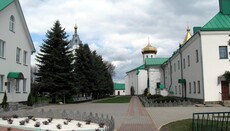
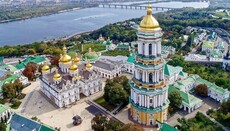
The Kyiv-Pechersk Lavra is one of the oldest shrines of the Orthodox Church, founded in the 11th century by Saints Anthony and Theodosius of the Caves. The relics of more than one hundred Kyiv-Pechersk saints rest there. The Lavra is a UNESCO World Heritage site, and legal experts argue that large-scale construction on its territory without prior assessment by the World Heritage Committee would contradict Ukraine’s international obligations.
As the UOJ previously reported, on July 1 the Verkhovna Rada adopted Law No. 15360 “On the Ukrainian National Pantheon,” initiated by Volodymyr Zelensky, with 287 MPs voting in favor. On the same day, the Cabinet of Ministers adopted Resolution No. 871, designating the Kyiv-Pechersk Lavra National Reserve as the site where the pantheon will be established.